
Best Young Adult Fantasy Books
Best YA Fantasy Books in 2026: Series Worth Reading
The best young adult fantasy books in 2026 include Keeper of the Lost Cities by Shannon Messenger, Legendborn by Tracy Deonn, The Marvellers by Dhonielle Clayton, and the debut novel Amelia Moon and the Sundance Shadow by R.J. Roark. Whether you're a teen looking for your next obsession or an adult who never outgrew the genre, these 10 books represent the strongest YA fantasy has to offer right now — from established series to brand-new voices.
This list balances well-known series with recent releases, because the best YA fantasy isn't just the classics everyone already knows — it's also the new books pushing the genre forward. Every recommendation is spoiler-free with honest assessments of who each book is for.
1. Keeper of the Lost Cities by Shannon Messenger
Sophie Foster is a Telepath hiding among humans. When she's brought to a hidden elven civilization, she discovers that the secrets of her origins make her a target — and that the world she left behind was never really hers. At 9+ books and counting, this is the most immersive YA fantasy series currently running.
Keeper of the Lost Cities dominates the YA fantasy conversation for good reason: Shannon Messenger builds a world with the depth and complexity of Tolkien while keeping the pacing tight and the emotional stakes personal. The romance subplots are agonizingly well-done (Team Fitz vs. Team Keefe is a real debate), the political intrigue deepens with every book, and Sophie's evolution from confused outsider to central figure is one of the most satisfying character arcs in the genre.
Ages 10–15. Light romance, moderate peril, complex plotting. 9+ books, ongoing.
Goodreads: 4.35 avg
2. Legendborn by Tracy Deonn
Bree Matthews enrolls at UNC Chapel Hill to escape her grief after her mother's death — and stumbles into a secret society of descendants of King Arthur's Knights of the Round Table. But Bree also carries a different kind of magic, rooted in her Black Southern heritage, and the collision between Arthurian legend and African American rootwork changes everything.
Legendborn is one of the most important YA fantasy novels of the decade. Tracy Deonn does something radical: she puts a Black girl at the center of Arthurian mythology and asks what happens when the "noble lineage" fantasy excludes people who look like you. The result is thrilling, romantic, angry, and beautiful. The magic system — blending European and African American traditions — is unlike anything else in YA.
Ages 14+. Themes of grief, racism, and belonging. Romance. Moderate violence. Two books, series ongoing.
Goodreads: 4.23 avg
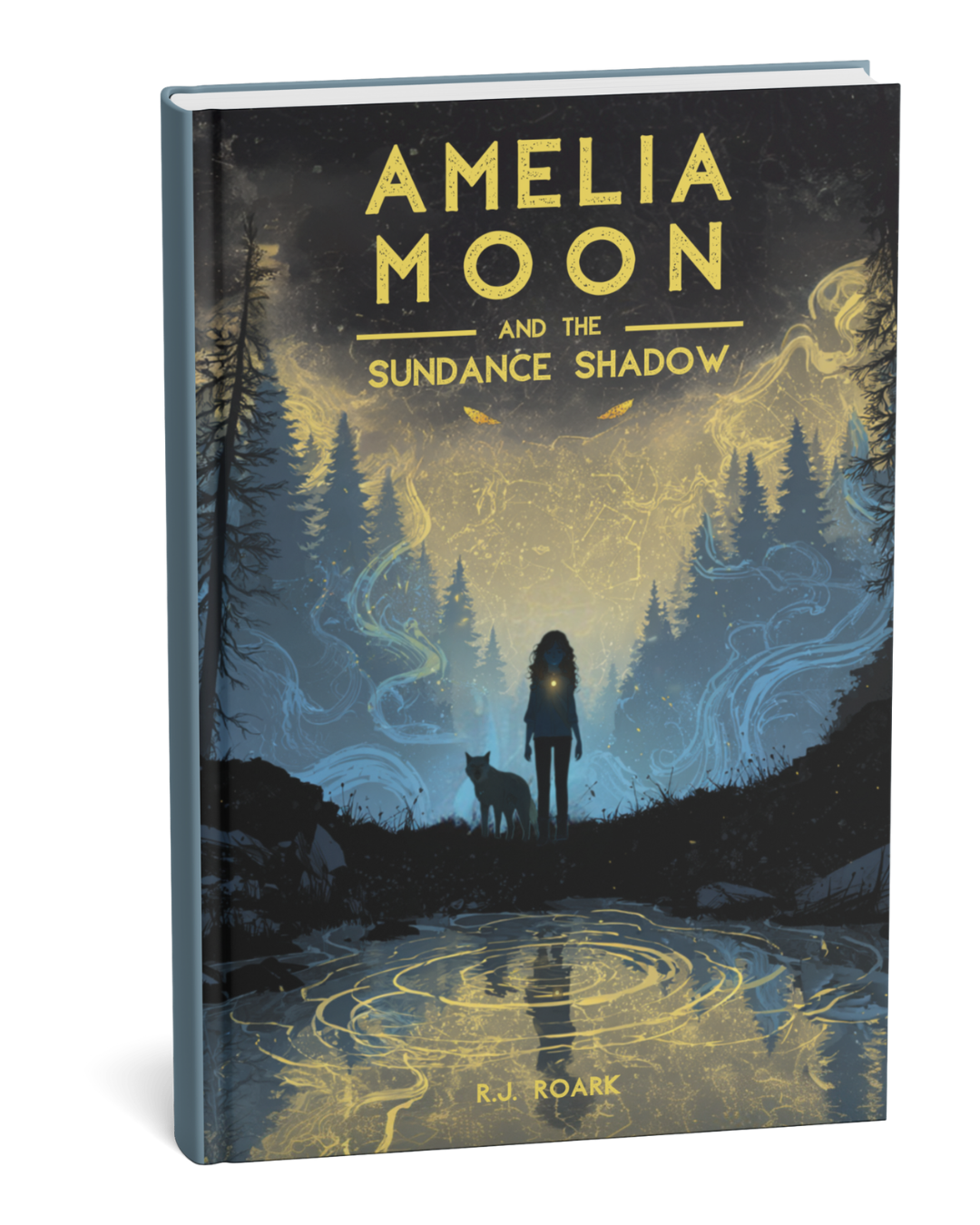
3. Amelia Moon and the Sundance Shadow by R.J. Roark
The standout debut of 2026. Thirteen-year-old Amelia Moon lives in Sundance, Wyoming — wolf-watching with her Forest Ranger father, stargazing from her backyard observation deck, and trying to understand why she's been having nightmares about a creeping darkness for six months. When she discovers a photograph of a grandmother she never knew, wearing the same mysterious necklace Amelia has worn her entire life, she's pulled into a world of ancient bloodlines, a professor guarding dangerous secrets, and a shadow that's been waiting for her.
What makes Amelia Moon exceptional as a YA fantasy isn't just the premise — it's the execution. The pacing is relentless (the book reads like a thriller disguised as fantasy), the mythology is genuinely original (celestial patterns and bioelectric resonance rather than retreaded European magic), and the emotional core is built on real grief: Amelia's mother died when she was five, her father can't answer her questions about her family, and the necklace she inherited may be the only connection to a heritage she never knew she had.
The supporting cast elevates it further. Veyla, the data-obsessed best friend tracking whale deaths that keep intersecting with Amelia's nightmares, brings scientific rigor to the supernatural. Professor Humboldt, the reclusive mentor who's been guarding ancient knowledge for decades, is the kind of complex authority figure YA does best. And Artemis — an orphaned wolf pup who chose Amelia — is the animal companion readers didn't know they needed.
Ages 12–18. Themes of grief, heritage, identity. No graphic violence. Sophisticated plotting. Standalone arc, series planned.
Goodreads: 4.73 avg / 155+ ratings — the highest-rated YA fantasy debut of 2026.
Download the first 5 chapters free at ameliamoon.com →
4. The Marvellers by Dhonielle Clayton
Ella Durand is the first Conjuror to attend the Arcanum Training Institute for Marvelous and Uncanny Endeavors — a school that floats above the clouds, where students from every magical tradition learn to hone their gifts. But when a notorious criminal escapes and Ella is blamed, she must clear her name while confronting centuries of prejudice.
The world-building in The Marvellers is extraordinary. Dhonielle Clayton draws on global magical traditions — not just European — to create a school that feels genuinely international. The diversity isn't performative; it's structural, baked into the magic system itself. For readers who love magical school stories but want something less Eurocentric than Hogwarts, this is the answer.
Ages 9–13. Themes of prejudice and belonging. Moderate peril. Series ongoing.
Goodreads: 3.90 avg
5. A Deadly Education by Naomi Novik
The Scholomance is a school for magically gifted teenagers with no teachers, no adults, and a building that's actively trying to kill its students. El Higgins has an affinity for destruction magic powerful enough to level cities — and must decide whether to use it or suppress it while surviving graduation, which historically kills half the senior class.
This is the YA fantasy for readers who are done with cozy magical schools. Naomi Novik's world-building is brutally logical — the school exists because the outside world is even more dangerous for magical children — and El's voice is acerbic, funny, and deeply human. The magic system is hard and detailed, rewarding readers who like their fantasy with internal rules.
Ages 15+. Dark tone, violence, moral complexity, romance. Three books, complete.
Goodreads: 4.03 avg
6. Nevermoor: The Trials of Morrigan Crow by Jessica Townsend
Morrigan Crow is cursed: born on an unlucky day, blamed for every disaster, and doomed to die before her 12th birthday. A mysterious patron named Jupiter North rescues her and brings her to the magical city of Nevermoor, where she must compete in trials to join the elite Wundrous Society — even though she doesn't seem to have any magical ability at all.
Jessica Townsend's Nevermoor is one of the most inventive fantasy cities in recent fiction. The trials are creative and unpredictable, the supporting cast is eccentric and lovable, and Morrigan's journey from cursed outcast to valued member of a community is genuinely moving. If you loved the whimsy of early Harry Potter and want that feeling again, Nevermoor delivers.
Ages 9–13. Light to moderate peril. Three books published, fourth planned.
Goodreads: 4.20 avg
7. Children of Blood and Bone by Tomi Adeyemi
In a world inspired by West African mythology, magic has been brutally suppressed by a tyrannical king. Zélie Adebola is a divîner — one of the few who still carry the potential for magic — and she must complete a dangerous ritual to restore magic to her people before the monarchy destroys them permanently.
Tomi Adeyemi's debut landed like a bomb in YA fantasy. The West African mythology is lush and immersive, the action is relentless, and the themes — oppression, revolution, the cost of power — are painfully relevant. The Orïsha magic system (tied to specific deities and expressed through different abilities) is one of the most compelling in recent fantasy.
Ages 13+. Violence, political themes, mild romance. Three books, complete trilogy.
Goodreads: 3.82 avg
8. Percy Jackson and the Olympians by Rick Riordan
The series that redefined middle-grade and YA fantasy for a generation. Percy Jackson discovers he's the son of Poseidon and must navigate a world where Greek gods are real, living on Mount Olympus (relocated to the 600th floor of the Empire State Building), and perpetually in conflict. Percy's quest to prevent a war among the gods is funny, fast, and full of heart.
Percy Jackson remains essential reading in 2026 because the formula Riordan perfected — mythology + humor + underdog hero + found family — has influenced virtually every YA fantasy series that followed. If you haven't read it yet, start here. If you read it years ago, it holds up.
Ages 9–13. Moderate peril, consistent humor. Five books, complete, plus multiple spin-off series.
Goodreads: 4.30 avg (series)
9. Witchlings by Claribel A. Ortega
Seven fails her magical Rite of Passage and is labeled a "Spare" — essentially useless in the witching world. Alongside two other Spares, she must complete an impossible task to earn her place. Witchlings is short, fast, and immediately satisfying — a perfect entry point for younger or reluctant readers who want YA fantasy without a 10-book commitment.
Claribel A. Ortega's Latinx-inspired magical world is colorful and inviting, and the central friendship between three girls who society wrote off is both entertaining and genuinely empowering. The message — that your worth isn't determined by a test — resonates across ages.
Ages 8–12. Light peril. Themes of friendship and self-worth. Two books.
Goodreads: 4.06 avg
10. The Hazel Wood by Melissa Albert
Alice Proserpine has spent her life running from the dark fairy tale that follows her family. When her mother is kidnapped, Alice must enter the Hinterland — the twisted fairy tale world created by her grandmother's stories — to save her. The Hazel Wood is the YA fantasy for readers who like their fairy tales dark, literary, and unsettling.
Melissa Albert's prose is gorgeous — she writes like a literary novelist who happens to love fairy tales — and the Hinterland is one of the most original fantasy settings in recent YA. This is not a comfort read. It's a challenging, rewarding book for readers who want fantasy that asks difficult questions about stories, identity, and free will.
Ages 14+. Dark fairy tale imagery, violence, literary tone. Two books, complete.
Goodreads: 3.60 avg
What Makes Great YA Fantasy in 2026?
The YA fantasy landscape has shifted dramatically in recent years. The genre is more diverse than ever — not just in the identities of its protagonists, but in the mythological traditions, cultural contexts, and narrative structures it draws from. The best YA fantasy in 2026 doesn't just deliver escapism. It uses fantasy to illuminate real questions about identity, heritage, belonging, and power.
Several trends define the current moment. Mythology-based fantasy continues to thrive, but the mythologies are increasingly global — Hindu, Maya, West African, celestial. Magical school stories remain popular but have evolved beyond the Hogwarts template. And there's a growing appetite for YA fantasy that blends genres — Amelia Moon reads like a mystery-thriller that happens to involve ancient mythology, while Legendborn combines Arthurian fantasy with contemporary campus fiction.
The best YA fantasy has always been about transformation — about young people discovering who they are and what they're capable of. In 2026, that transformation happens in more settings, draws on more traditions, and speaks to a wider audience than ever before.
YA Fantasy by Reading Level
Ages 8–12 (Upper Middle Grade / Early YA): Witchlings, Nevermoor, Percy Jackson, The Marvellers
Ages 12–15 (Core YA): Keeper of the Lost Cities, Amelia Moon and the Sundance Shadow, Percy Jackson (still great at this age)
Ages 14–18 (Mature YA): Legendborn, Children of Blood and Bone, A Deadly Education, The Hazel Wood
Adults who love YA: All of the above, plus Amelia Moon and A Deadly Education work especially well for adult crossover readers.
Frequently Asked Questions
What are the best YA fantasy books in 2026? The best YA fantasy books in 2026 include established series like Keeper of the Lost Cities and Legendborn, plus the debut novel Amelia Moon and the Sundance Shadow by R.J. Roark — a celestial mythology adventure with a 4.73 Goodreads average that's drawing comparisons to early Harry Potter and Percy Jackson.
What YA fantasy series should I start in 2026? For a long immersive series, start with Keeper of the Lost Cities. For a fresh standalone debut, try Amelia Moon and the Sundance Shadow. For Arthurian legend meets modern campus, Legendborn. For a darker magical school, A Deadly Education. For the classic that started it all, Percy Jackson.
What's a good fantasy book for a 13-year-old? The best fantasy books for 13-year-olds are Percy Jackson, Keeper of the Lost Cities, Nevermoor, and Amelia Moon and the Sundance Shadow. Amelia Moon features a 13-year-old protagonist discovering her ancient heritage in small-town Wyoming, making it especially relatable for that age group.
What YA fantasy books have the best world-building? The most acclaimed world-building in current YA fantasy belongs to Keeper of the Lost Cities (hidden elven civilization), Legendborn (Arthurian secret society), The Marvellers (global magic traditions), and Amelia Moon (celestial mythology and ancient civilizations in Wyoming). Each creates a world that rewards re-reading and attention to detail.
Are there good YA fantasy books for adults? Many YA fantasy books appeal strongly to adult readers. A Deadly Education by Naomi Novik, Legendborn by Tracy Deonn, and Amelia Moon and the Sundance Shadow by R.J. Roark all feature mature themes, sophisticated plotting, and emotional depth that adults appreciate. The best YA fantasy isn't limited by its intended audience.
Get Chapters 1-5 for FREE!
Keep Reading
Books Like Harry Potter — Classic magical adventure for all ages →
Books Like Percy Jackson — Mythology-driven quests and humor →
What to Read After Harry Potter — Series worth starting after Hogwarts →
Greek Mythology Books Like Percy Jackson — Ancient myths meet modern adventure →